
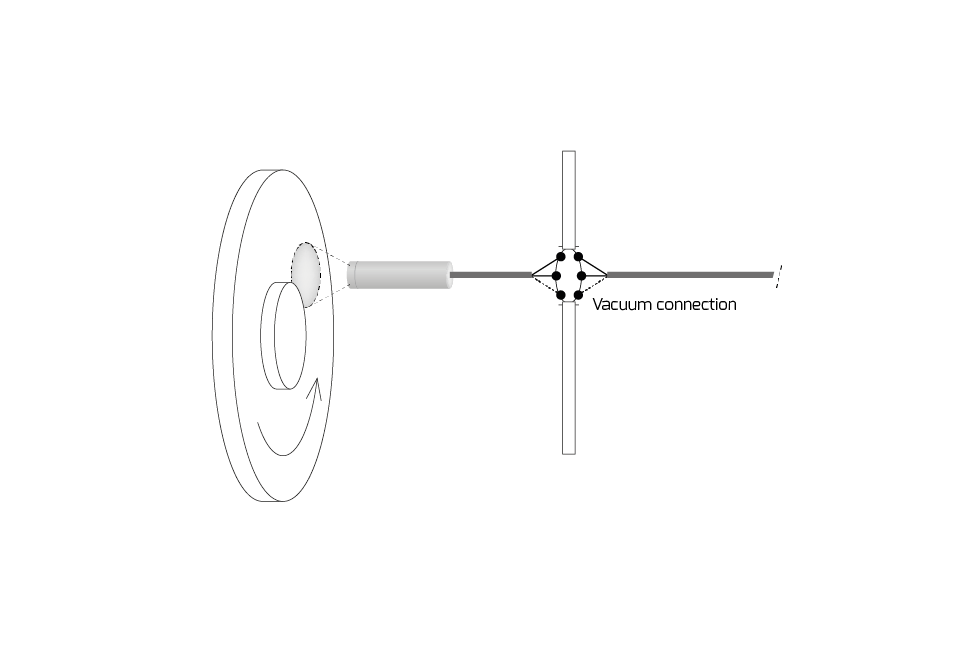

Large steam and gas turbine rotor disks experience
the IRt/c operates in a vacuum without any requi-
high forces during full-speed operation. In order to
rement for protection. Its thermocouple leads can
assure mechanical reliability under these conditions,
be connected to a standard thermocouple vacuum
they require spin testing. This testing is usually
connector. Test installation design considerations
conducted in a large vacuum chamber, to minimize
should include IRt/c body temperature and target
the power required to drive the rotor. However,
emissivity. To ensure that the IRt/c will remain below
since the vacuum in the chamber is not absolute,
100°C (212°F) even with very hot targets, you should
rotor heating does occur during the test. In order to
use a solid metal mounting arrangement to heat
properly assess performance, rotor disk tempera-
sink the IRt/c body. This is effective since the internal
ture must be established. Standard measurement
construction is designed to readily conduct away
methods (disk-mounted sensors, using slip rings
radiated heat. For emissivity considerations, a shiny
or telemetry to transmit the data), can be clumsy
metal rotor disk should have black painted stripes
and expensive. An IRt/c can directly measure the
Quick installation guide
in the areas of measurement. For best accuracy, the
temperature of the rotor under full- speed condi-
IRt/c read-out device can be calibrated to the precise
tions. With its hermetically-sealed construction,
pre-calibrted models
surface conditions by using a Microscanner D-Series.